Sunday, 7 February 2016

About Crabs.

Crab.
The crab is a beast member crustaceans decapod of upabangsa (infraordo) brachyura, which is known to have a "tail" which is very short (Greek: brachy = short, ura = tail), or the stomach (abdomen) is completely hidden under the chest (thorax ). Crab's body is protected by a very hard shell, composed of chitin, and armed with a pair of tweezers. The crabs are another name for crab.
Crab found in all the oceans of the world. There is also a freshwater and terrestrial crabs, particularly in tropical regions. Crab is a crab that live in marine waters and rarely rises to the beach, while the crab is a crab inhabitants of freshwater (rivers and lakes).
Crabs vary in size from the pea crab, a width of only a few millimeters, up to the Japanese spider crab, with a leg span of up to 4 m.

Anatomy.

True crabs have five pairs of legs; The first pair of legs is modified into a pair of claws and are not used to moving. In almost all kinds of crabs, except a few (eg, Raninoida), belly folded under the cephalothorax. Part crab mouth covered by maxilliped flat, and the front of the carapace does not form a long rostrum. Gills crabs are formed of flattened plates ( "phyllobranchiate"), similar to the gills of shrimp, but with a different structure.

Crab.

Yuyu is a kind of freshwater crab. The word is taken from the Java language. This freshwater crabs there are many kinds, and is often found in rivers, lakes and paddy fields; included in the trenches and muddy soil in the vicinity. In zoology, the types of crab are usually classified into Parathelphusidae tribe or Gecarcinucidae, superfamilia Gecarcinucoidea. Yuyu not rarely seen outside of the water. Unlike the sea crabs that a pair of flat-shaped hind legs, crab legs all have a pointed tip. Shell crab backs generally brownish, blackish to dark purple; often have indentations like former hooves trampled. Edge of the shell sometimes there who have some small spines.

Animal pests.

Some types of crab is a pest to farmers because it makes nest holes in the rice fields and the edge of the irrigation channels, and the leaking of water needed to irrigate the fields. Certain types of rice seedlings were also damaged, as well as Parathelphusa convexa, Bogoriensis P., and P. tridentata. Type Terrathelphusa (Perbrinckia) kuhli recorded once damaging the young tobacco plants in total in Banyumas.

Predators.

Yuyu many predators. Beavers, mice, lizards, and various species of water birds listed as natural enemies, which are crucial for controlling the crab population. In the area of ​​brackish water, frogs (Fejervarya cancrivora) and mangrove snake (Fordonia leucobalia) are known to prey on crab. Java Farmers often use animal meat as bait for rat poison fields.

Know Some crab species Toxic.

Talk about the crab, usually we will refer to the crabs that can be consumed, such as mud crab (Scylla spp.) Or crab (Portunus pelagicus). However, the real world is a lot of species of crab, both the crabs from the group brachyura or Anomura. Brachyura is a group of true crabs, have four pairs of legs motion fully developed, while Anomura is a group of crabs 'false', only has three pairs of legs fully developed motion - the fourth leg motion is very small or hardly visible.

Of all the species now known, in fact only a few that can be consumed. In fact, some species of crabs are known as the toxic species. Then, the question that then arises is, what is poisonous crab? Any toxic contained in the body of the crab? Furthermore, why the crabs become toxic? Let's look together the intricacies of toxins in crabs.

Toxins in the body of the crab.

Several types of known poisons contained in the body of the crab is domoic acid, Okadaic acid, Palytoxin, tetrodotoxin, saxitoxin, neosaxitoxin, surugatoxin, brevetoxin, nereistoxin, and gonyautoxin. Besides Palytoxin, all toxins are included in the group of neurotoxins, which is toxic to nerve cells in action, and usually interact with membrane proteins.

Domoic acid is a toxic acidic. The name 'domoic' comes from the word 'doumoi', the local term Japanese from red algae Chondria armata. According to Horner (published in 1996), these toxins are known to accumulate in tissues of crabs and shellfish.

Okadaic acid has a way of working that is similar to domoic acid. Okadaic term taken from the marine sponge Halichondria okadai. However, producing this toxin that is actually a group of dinoflagellate algae. Nevertheless, it turns out this toxin can also be contained in the body of the crab.

Palytoxin first known there are fish that consume zoanthids Palythoa, anemone-like organisms. Palitoksin works by forming a new membrane channels that exceed normal that ion transport becomes uncontrolled and cause malfunction of cells and tissues.

Tetrodotoxin (TTX) was first detected in fish Tetraodontidae tribe. This poison is also a neurotoxin with a mechanism of inhibition of sodium ion transport.

Saxitoxin (STX) is a nonprotein toxic compound, is insoluble in water and also have an inhibitory effect of sodium ion transport. This toxin has an effect equivalent to TTX. According to Groves et al (1980), STS and TTX produced by the dinoflagellate, though can also be found on a wide variety of marine life.

Other toxins such as Neosaxitoxin (neoSTX), brevetoxin, Surugatoxin, Nereistoxin, and Gonyautoxin also a neurotoxin that can be found in the crab's body although in very small amounts. These toxins are also found in the bodies of other animals such as clams and marine worms.


Why do the crab becomes toxic?

If we look at the classification of toxins, it can be concluded that while the actual producer of these toxins is not a species of crab. Some species produce toxins even algae. So, how can the crabs become toxic?

Toxic crabs can be divided into two groups, namely toxic permanent (permanent toxicity properties) and temporary. The crabs are generally a member of the tribe Xanthidae. Crabs are known to be toxic permanent is Lopozozymus Pictor, Demania spp., Zosimus aeneus, Platypodia granulosa and Atergatis floridus. Meanwhile, crabs that are toxic Temporary example is Atergatis integerrimus and Atergatis spp. (All species except Atergatis Atergatis floridus). This temporary category crab toxic level of toxicity depends on habitat.

Until now there are at least two things that are believed to be the cause of the crabs become toxic, namely  :

(1) contamination and accumulation of toxins from food consumption,
(2) the effect of habitat (especially the presence of bacteria, algae and toxin-producing organisms).

Some studies in two or three decades ago mentioned that the main food source of dinoflagellate species are poisonous crabs, shellfish (bivalves and gastropods), worms (Polychaeta) as well as some species of algae. The consumption pattern of this kind can cause crabs accumulate these toxins because there are toxins such as TTX, STX and Okadaic acid produced by the dinoflagellate known.

How toxins from food can accumulate and why it did not cause toxicity in these crabs. The mechanism of exocytosis and endocytosis allegedly became a way for toxic substances accumulate in the body of the crab. Submitted that the toxic compound most commonly found in the liver and gonads crab intestine. Description of research Negri and Llewllyn that some species of the tribe Xanthidae has a defense mechanism against toxins (STX, TTX and turunanna). This mechanism is to produce proteins haemolimph are pharmacologically the same as saxiphilin, are compounds that can bind to toxins.

Habitat also affect the level of toxicity crab, especially crabs that are toxic temporary. The existence of algae, bacteria and toxin-producing organisms in a habitat can play an important role as a cause of crabs (as well as other animals such as shellfish and fish) become toxic. Bacteria such as Pseudomonas sp., Alteromonas sp., Moraxella sp., And Acinetobacter sp. known also capable of producing STX and neoSTX autonomously. Another group of bacteria known to produce TTX Vibrionaceae. These bacteria can be associated with crab (eg symbiotic and living in the section below the crab carapace) and lead to increased toxicity of the crab.

Furthermore, harmful algal population explosion events (especially those that can produce toxins) in a crab habitat can also cause increased toxicity crab. Crabs Xanthidae tribes generally have behavioral 'lazy' to move so that the limited range area. If the habitat is undergoing toxin-producing algal bloom, nature 'lazy' This move will increase the chances of contamination and accumulation of toxic compounds in the body of the crab.
Thank you for reading this article. Written and posted by Bambang Sunarno. sunarnobambang86@gmail.com
author:
https://plus.google.com/105319704331231770941.
name: Bambang Sunarno.
http://primadonablog.blogspot.com/2016/02/about-crabs.html
Publiushed Date: 07 February 2016 at 12:52
Tag : Crabs.
Code : 7MHPNPADAEFW

Posted by: Bambang Sunarno
www.Primo.com Updated at: 12:52

About Cockroaches.

Cockroaches.
Cockroaches, cockroach, or coro are insects (class Insecta) of the order Blattodea which consists of approximately 3,500 species in 6 familia. Cockroach found in almost all parts of the world, except in the polar regions.
Among the most notable species are the American cockroach, Periplaneta americana, which has a length of 3 cm, the German cockroach, Blattella germanica, with a length of ± 1½ cm, and the Asian cockroach, Blattella asahinai, also with a length of about 1 ½ cm. Cockroaches are often regarded as pests in the building, although only a few of thousands of species of cockroaches that are included in this category.

Cockroach history.

According to historians animals, cockroaches have existed since 320 million years ago. They first present before the dinosaurs are believed appeared 250 million years ago. Unlike other animals, they are seen to have a form of evolution today.

Now cockroach meets all locations on Earth, even in Antarctica though! There are different kinds of cockroaches, there are at least 3500 types (according planetcocroach.com), other sources say even reach 5,000 species. They chose to live in damp places, such as garbage disposal, behind cabinets, even under the bed!

Its presence in the human community is not something to be expected. They are many, but not edible. If only edible, of course, hunger never existed in the world - anyway who also want to eat a cockroach. Instead, we hate it, avoid it, and some even fear him. I know people who macho, brave, wise, but afraid of cockroaches. Amusingly see their behavior when faced with a cockroach, haha.

Why Hated Cockroach.

Somehow, our perspective on the same cockroach: DISGUSTED! Perhaps because we know where they live. Or perhaps since birth we've had the same instinct to cockroaches: shocker! Going into this interesting research topic. Some babies can be sampled on this. But of course her parents would never permit because his parents knew it was disgusting cockroach. So, we will probably never know if these feelings of disgust towards cockroaches congenital or due to environmental influences.

Disgust, they should be cast! Murder cockroach is not only for reasons of disgust, but also for health reasons. Although there is no scientific proof that the body of a cockroach carrying infectious diseases to humans, but because of a cockroach likes to hang around in dirty (lots of germs) then automatic when he walked on top of the mattress we had dirt stuck to the top of the mattress pads. Still mending mattress, they can be washed. Instead of streets on our food, the food should be discarded.

Fact dirtiness cockroaches: cockroaches favorite food is garbage or leftover food, ie food-eating stale that is certainly a lot of bacteria and viruses. They taste their food with her legs. With legs that also they take a walk over your floor. Hiii, you can imagine how slovenly former step of the cockroach.

If you get a cockroach in your home, then you may not be quiet because it meant he had many friends. Cockroach always live in groups. When walking, they leave a trail that can be recognized by other cockroaches so that there will never be a cockroach is a stray. This ensures a cockroach to continue to live together, get a meal, and of course continue the descent.

The first miracle: geomagnetic.

But get rid of cockroaches is not easy thing. Menyambit with slippers clearly not the solution. At least he's only a short run - we not want to throw him out, but ended their lives! We often do is ferret cockroach so no one in sight. Once within the stampede, instantly trampled!

Cockroaches are very agile. It took some time before finally stamping on a cockroach were killed. In addition, imagine such a cockroach disgust trampled and remove fluid from the body making us often tread by not wholeheartedly - this contributes to why we often miss the mark stamping. However, the book thrown or hit with any wood, cockroach remains hard to kill. They were very agile, can be avoided with the right seemed to know where the attack is coming.

Agility cockroach became one subject of the research: why cockroaches can dodge attacks with ease. Cockroaches utilizing the earth's magnetic field (geomagnetic) to guide the movement as an online magazine Wired published science based on the report of the Journal of Experimental Biology, Vol. 212 Issue 21, November 1, 2009.

This study conducted a series of experiments to cockroaches in the electric field and radio waves. The researchers revealed that cockroaches can map the geomagnetic field as well as birds. This is not a cheesy science! Geomagnetic feel is already a surplus of insects, but this is not just a feeling, but look! And because they've inhabited this Earth 350 million years, this mapping system already spread all kinds of cockroaches! In other words, they are born already know what he looks like from the perspective of the Earth's geomagnetic field. Crazy!

Meaning: to kill him, for they are not agile. To make it agile, remove the geomagnetic field. To eliminate the geomagnetic field, destroy the Earth. Conclusion: to kill a cockroach, destroy the Earth.


The second miracle: blattabacterium.

Mapping the Earth's geomagnetic field is not the only advantages of a cockroach. A report in the Proceedings of the National Academy of Sciences, Vol. 106, No. 43, October 27, 2009, as reported in the online magazine Wired science says that there is a type of bacteria called blattabacterium capable of converting waste into nutrients needed to live cockroach. It makes cockroaches can survive from eating anything. Even crazier, was so efficient recycling system that bacteria do before, cockroaches do not need to pee!

The presence of these bacteria make a cockroach can live a simple, effective, and efficient. But on the other hand, cockroaches became very dependent on bacterial expected "perch" in the body of a cockroach 140 million years ago. If these bacteria die, the cockroach loses all capabilities associated with the body's metabolism. Cockroaches have lost the ability to metabolize itself.

Meaning: to kill a cockroach, please kill this blattabacterium. However, what poison that can effectively kill these bacteria? Scientists thought that these bacteria can mutate so resistant to the toxin given.


Facts to Know About the Cockroach.

Do not be afraid of cockroaches. If the fear of being increasingly attacked. Hard to put into practice? Heard it just has to make skin crawl, let alone confront directly.

Cockroaches including many of the most hated insects. Like in a dirty place so disgusting. Especially when it suddenly flat insects can fly up to you like a little monster, well, it's no wonder that so many phobia, especially women.


Some facts that you know why :

1. Cockroaches have a radar that could detect the fear experienced by
    people in sekitarnya.Kecoa have a nervous system and the system
    motor movement is astounding, and has a reaction speed
    very impressive, to escape from danger, including reaction
    attached to the object that has the fear him, as
    self-defense reaction of the cockroach.

2. Cockroaches located almost in all parts of the world, except in the polar
    regions.

3. Among the most notable species are the American cockroach (Periplaneta
    americana), which has a length of 3 centimeters (cm), German cockroach
    (Blattella germanica), with a length of ± 1.5 cm, and the Asian cockroach
    (Blattella asahinai), with about 1.5 cm long also. However, the most
    substantial in size may Australian burrowing cockroach can grow
    up to 9 cm.

4. According to the study, the cockroach has been on earth since 300 million
    years ago or older than the dinosaurs.
    When the family of giant reptiles extinct dinosaurs about 65 million years ago,
    cockroach family to survive until now. Biologists even
    estimates, in case of an atomic catastrophe on earth, one of the creatures
    life will still exist is a cockroach.

5. Speed ​​cockroach ran only about 5 kilometers per hour. Which is very
    Awesome is the reaction speed senso-motor system in
    responding to stimuli from the outside.

6. In the long evolutionary history, developed two systems senso-
    independent motor. That means, they can function in unison,
    or also serve each other without depending on the system.

Senso-motoric system first located in the head, with two antennas that function as tuning vibration. The second part of the hind legs that extend into the abdomen, with fine hairs, also serves a similar antenna.
If the vibration of a tuning system in the hind legs or antennae on the head gets a sudden stimulus, the reaction occurs only within 15-20 milliseconds or faster than the blink of an eye, the cockroach is already reacting a defense to save himself.

7. Two senso-motoric system cockroach separate and independent so that if one
    sabotaged or shut down the system, the other system is still active and
    function. In fact, cockroaches were beheaded still react as quickly as
    originally.
Thank you for reading this article. Written and posted by Bambang Sunarno. sunarnobambang86@gmail.com
author:
https://plus.google.com/105319704331231770941.
name: Bambang Sunarno.
http://primadonablog.blogspot.com/2016/02/about-cockroaches.html
Date Published: 07 February 2016 at 11:31
Tag : Cockroaches.
Code : 7MHPNPADAEFW

Posted by: Bambang Sunarno
www.Primo.com Updated at: 11:31

About Penguin.

Emperor Penguin.
Penguin or pinguin (order Sphenisciformes, family Spheniscidae) is an aquatic animal species of birds that can not fly and generally live in the southern hemisphere.

Across the world there are 16 species of penguins depend on whether the two species as well as species Eudyptula calculated. Although all penguin species originally came from the southern hemisphere, but penguins are not found only in cold regions or in the Antarctic. There are three species of penguin that live in the tropics. One of the species live in the Galapagos Islands (Galapagos Penguin) and usually cross the equator in search of food.
Largest penguin species is the Emperor Penguin (Aptenodytes forsteri) with a height of up to 1.1 meters and weighing 35 kilograms or more.

The smallest penguin species is the Fairy Penguin (Eudyptula Minor) with a height of about 40 cm and weighing one kg. In general, large penguin better able to maintain their body temperature so that it can survive in colder regions, while smaller penguins are generally found in areas with warmer even the tropics.
Generally penguins feed on krill (kind of shrimp), fish, squid and other aquatic animals are caught while swimming in the sea with its beak. Penguins can drink sea water because supraorbital gland in the body filter out excess sea salt from the bloodstream. This salt is then removed in liquid form via the respiratory tract penguin.

Penguin looks are not afraid of human presence. They will be closer to the group of researchers who are studying them.
But the form of a big fight between the penguins will happen if a mother penguin lost her child (because they can not survive in a big storm or eaten by predators). If a child is missing, the mother penguin will "steal" a child of a mother penguin penguin others. This behavior attracted the attention of scientists. Interestingly, the other female penguins in the penguin groups dislike "theft" and would help, and "defend" penguin mother whose child was stolen.
Penguin body is very suitable for swimming and live in the water. Its wings are rowers and unable to fly. In mainland penguin using tails and wings to maintain balance when walking.

Each penguin has a white color on the inside of his body and dark color (usually black) on the outside of the body. This is useful for camouflage. Predators such as sea lions in the water would be difficult to see the penguin because her belly is white mixed with sea surface reflections. While a dark surface on the back also disguise penguin predators of view on the water.
Penguin able to swim at speeds of 6 to 12 km / h even been recorded up to
27 km / h. Penguin small size usually dive for one to two minutes away from the surface of the water to catch food. Penguin larger, the Emperor penguins can dive deeper, to 565 meters for 20 minutes.

Running and sliding.

To save energy, sometimes penguin walk with short legs or slide on the snow with his stomach.


Sensing capabilities.

Penguin has a very good hearing. If on land, penguins relying heavily on their hearing. Penguin eye adapted for underwater vision in finding food and avoiding predators. The ability of olfactory penguin is still not widely known and requires further research.

Gender.

To view sex penguin is very difficult, because penguins have no external genitalia. As a result, to distinguish the sex of penguins, man must wear a chromosome examination techniques / DNA.

The emperor penguin.

Emperor penguins that have a Latin name Aptenodytes forsteri, including the largest species of penguin family, namely with heights reaching over 1 meter and weighs more than 35 kg. Just like other types of penguins, emperor penguins also have berjaring legs and thick fur all over his body which is watertight, and is a species of bird that can not fly.
Emperor penguin was described in 1844 by British zoologist George Robert Gray.
But the most visible characteristic to distinguish the emperor penguin with other penguin species is the faint yellow line on the neck. Unlike the king penguins, where the yellow line on the neck penguin is more striking and arced firmly around his neck than emperor penguins.

Residence.

The population of emperor penguins found only in Antarctica - the South Pole of the earth, the coldest areas in the southernmost parts of the world with the lowest temperature reached -73 ° Celsius. They nest along the waterfront area of ​​the Antarctic continent.
Emperor penguins can survive in cold temperatures such as 2-3 cm thick layer of fat on the body are useful for storing hot and cold air separate from the outside.


Food.

Emperor penguins are the main food of fish, shrimp, and squid. Anatomy short wings that allow this kind penguin to swim as far as 15 km and dive to a depth of 900 feet for 18 minutes. Therefore, it eats fish larger than that eaten by penguins with smaller body size.

Reproduction.

Period of the emperor penguin mating occurs throughout the year in June-August. Adult male penguin will flap-flapping wings to attract females, then when they have found the right partner will either create a bond through the wings find each other in the back of the neck. Penguin is a species of bird that is faithful to one partner.
After experiencing a period of mating, the female penguin will spawn and the eggs of the emperor penguin shaped like a pear. Incubating period is the duty of the male penguin, for approximately three months, the eggs will be incubated at the foot penguin and protected by the lower part of their abdomen. Then the male penguins will form large colonies to keep the temperature of the eggs remain warm, while the female penguin in a group would go as far as 90 miles to collect food.
When the eggs hatch, the male penguin that has been provided food reserves will keep their children until the mother returned. Vice versa, when the female penguin back to take care of a baby penguin, penguin males went to find food, constantly turns up to 13 months and grow into a baby penguin penguin independent.


Habitat.

There are 40 breeding colonies around the Antarctic, and in one colony, respectively, amounting to 10,000 head Emperor Penguin adult. These colonies will hold together and mutually warm each other by standing shoulder to shoulder with each other, especially when the male penguins incubating eggs. In January-February, the penguin will migrate to the south of the earth in search of food.
Baby penguins are never taught how to swim, dive or hunting by his parents. Automatically, the penguin will adapt itself to survive. If they are tired of walking, penguins will slide on ice using chest.
The population of Emperor penguins depend on the number of fish in the sea, if fishing by humans continues to be done on a large scale, the penguin population can be reduced in number. In general, penguins do not have a lot of enemies, sea lions is their main enemy. But with their agility in the water, penguins can easily avoid it.

Fact.

1. No one knows exactly where the penguins get
    his name, but is likely to come from the Latin meaning pinguis
    fat.
2. penguin ancestors have lived since 60 million years ago in the days
    prehistoric, namely Waimanu.
3. Emperor penguins have very good eyesight so as to enable
    him to see in the dark depths.
4. All species of penguins do not have teeth, they catch fish by
    sharp beak and then immediately swallowed.
5. The number of penguin populations have dropped by 50% during the
    next 50 years
    last. The main cause is precisely because of the reduced area of ​​the
    covered in ice in Antarctica due to global warming.

The types of penguins  :

King Penguin, Aptenodytes patagonicus.
Gentoo Penguin, Pygoscelis Papua.
Adelie Penguin, Pygoscelis adeliae.
Chinstrap penguins, Pygoscelis antarctica.
Rockhopper Penguin, Eudyptes chrysocome.
Fiordland Penguin, Eudyptes pachyrhynchus.
Snares Penguin, Eudyptes robustus.
Royal Penguin, Eudyptes Schlegeli.
Erect-Crested Penguin, Eudyptes sclateri.
Macaroni Penguin, Eudyptes chrysolophus.
Yellow Eye Penguin, Megadyptes antipodes.
Small Penguin (Penguin Blue or Fairy Penguin), Eudyptula minor.
Penguin White flippered, Eudyptula albosignata.
African Penguin (Jackass Penguin), Spheniscus demersus.
Magellanic Penguin, Spheniscus magellanicus.
Humboldt Penguin, Spheniscus humboldti.
Galapagos Penguin, Spheniscus mendiculus.
Thank you for reading this article. Written and posted by Bambang Sunarno. sunarnobambang86@gmail.com
author:
https://plus.google.com/105319704331231770941.
name: Bambang Sunarno.
http://primadonablog.blogspot.com/2016/02/about-penguin.html
Date Published: 07 February 2016 at 10:48
Tag : Penguin.
Code : 7MHPNPADAEFW

Posted by: Bambang Sunarno
www.Primo.com Updated at: 10:48

Saturday, 6 February 2016

Betel leaf.

Betel leaf.
Betel is native to Indonesia who grow vines or leaning on another tree. As usual leaves and fruit culture chewed with gambier, areca nut, tobacco and lime. But chewing betel has been associated with cancers of the mouth and the formation of squamous cell carcinoma is malignant. Also chalk making gum shrinkage (periodentitis) which can make teeth, although betel leaves containing antiseptic preventer of cavities.

Betel used as a medicinal plant (fitofarmaka); very important role in the life and various ceremonies Malay.
In Indonesia, betel is a typical flora Riau Islands province. Riau Islands society upholds the culture of eating betel ceremony especially during ceremonies welcoming guests and use betel as a cure various kinds of diseases. Nevertheless, many betel plant found throughout Indonesia, exploited or simply as an ornamental plant.


The characteristics of the stem, leaf, and flower / fruit.

These vines can reach a height of 15 m. Trunk betel greenish brown, round, segmented and the exit point of the root. The leaves are heart-shaped sole, pointy-toed, growing alternately, stemmed, and remove unpleasant odor when crushed. Its length is about 5-8 cm wide and 2-5 cm. The flowers are shaped compound grains and bract ± 1 mm elliptical. In males grain length is about 1.5 to 3 cm and there are two short stamens being on female heads of its length is about 1.5 to 6 cm where there are stigmas three to five pieces of white and yellowish green. The fruit is a round berry fruit grayish green. Its roots riding, round and yellowish brown.

Ingredients and benefits.

Essential oil of betel leaf oil contains fly (betIephenol), seskuiterpen, starch, diatase, sugar and tannic substances and kavikol that have deadly germs, antioxidants and fungicides, anti-fungal. Betel nutritious eliminate body odor caused by bacteria and fungi. Betel leaves are also resist bleeding, heal wounds on the skin, and gastrointestinal disorders. It also is wrinkled, sputum, saliva shed, hemostatic, and stop the bleeding. Typically for a bloody nose medication, used two fresh leaves of Piper betle, washed, rolled and then inserted into the nostril. In addition, the active ingredient phenol and kavikol forest betel leaf can also be used as vegetable pesticides for control of sucking insects.


Usability.

Cough
Sprue
bronchitis
pimple
whitish
Toothache because of the holes
Dengue fever
Bad breath
Irregular menstruation
Asthma
Sore throat (leaves and oil)
Swollen gums (sap)
Cleaning Eyes
underarm odor


External use.

Eczema
Burns
Ulceration (pyodermi)
ringworm foot
boil
Nosebleed
Sore eyes
bleeding gums
Reducing excessive milk production
Relieves itching.

Red betel.

Red betel vines are planted by people because of the efficacy of treatment and also the beauty of the leaves. This plant is still closely with the betel nut and pepper. The scientific name of plant origin are Piper ornatum Sulawesi, but some libraries messed with Piper crocatum, non-cultivated plants originating from the Americas. And red betel can also be used as a cure diabetes mellitus, hepatitis, gout, kidney stones, lower cholesterol, prevent stroke, vaginal discharge, inflammation of the prostate, eye inflammation, ulcers, fatigue, joint pain, and softens the skin.


Plant Characteristics Red Betel (Piper crocatum).

Betel (Piper betle) is a species of vines and leaning on a tree trunk lain.Tanaman is able to reach tens of meters in length. Flat leaf shape resembles a heart, the stem is rather long, flat leaf edges, leaf tip pointed, notched leaf base, pinnate leaves bones, and flesh thin leaves. Surface leaves are green and smooth, while the trunk tembelek green or brownish green and skin surface rough and wrinkled. Betel leaves are lush measuring between 8 cm-12 cm wide and 10 cm-15 cm long.

Red betel plants prefer to grow in the shade. For example, under the shade of large trees. Can also thrives in a cool temperate. It only took 60-75% of sunlight. By growing in the shade, the leaves will be widened. His maroon color that will pretty soon be visible when the leaves are reversed. The trunk grows fat. When exposed to a lot of sunlight, the stem dries quickly. Conversely if too much contact with water will rot the roots and stems. If too much on the provision of water, the plant will die. Excessive radiation intensity causes a betel plants die. That is, if they are grown in pots should not be directly in the sun. Very good if you use the cover (net) so that no direct contact with rain.

Betel plants have fibrous root system. And at the root of betel plants have parts such as stem root, root and branch root fibers. Roots on the betel plant is a modification to fulfill its function of roots called root placard that roots out the books climbing plant stems and useful to attach themselves to his support.

Bone bottom leaves bald or very short hair, thick, white, length of 5 cm-18 cm, a width of 2.5 cm-10.5 cm. Flower-shaped grains, stand alone dealing with the tip of a branch and leaves. Bract circular, inverted egg round or oval, length of approximately 1 mm. Male ears, long handle of 2.5 cm-3 cm, stamens very short. Female ears, long handle of 2.5 cm 6 cm. Anthers 3-5. Berry, spherical, with a bare tip. Ripe ears of the gray-haired, meetings, thick 1 cm to 1.5 cm. Seeds circle. Cultivation of red betel can pass a nursery or propagation. Can be through cuttings, grafts, and utilize every sniper rod. For starters, you should choose the way of the first and second. While crouching rod can be done when red betel plants already started spreading or growing rapidly.

The main enemy is red betel slugs, small snails and ants. When the leaves will use medications, should not use pesticides to ward off pests. Clearly, these pests should be discarded immediately. When watering was not allowed to wear any water, such as water times. Because it contains a lot of small animals that can damage the plant. If held leaves thick and rigid. Propagation of red betel usually done by grafting. Cropping media such as soil, sand and compost.


Benefits of Plants Red Betel (Piper crocatum).

Description of plants:

Kind of red betel or in scientific language crocatum Piper is one kind of plant betel piper beetle which is a vine with leaf form as red hearts typically live at high altitudes,

Usually when red betel planted in areas that have high levels of heat or in direct sunlight, the stem on the red betel will quickly dry up and the red dye contained in the leaves will slowly fade.
Red betel plant has actually been used by the people of Indonesia, Java since time immemorial. the benefits of which are used not only as a medicinal plant from various diseases but also as the equipment used in traditional ceremonies as well as a beauty cosmetic Javanese women past.


Chemical content.

Chemical constituents contained in red betel include flavonoids, Polivenol, alkoloid, tannins, oils astsiri, saponin, hidroksikaficol, kavicol, kavibetol, allylprokatekol, karvokrol, eugenol, P-cymene, cineole, coryofelen, kadimen, ekstragol, terpenana, and phenyl propoda

Efficacy and Benefits.

Chemical compounds contained in red siri has properties as follows: compound and polivenol flavonoids act as antioxidants, antideabetik, anticancer, antiseptic and antiflamasi. alkoloid compound in red betel can also be utilized as an impediment to the growth of cancer cells.

A study conducted by media rats proved that stew of red betel leaf given to rats which had been affected by diabetes can lower blood sugar levels in the rat it is proved that red betel can be used as drugs to lower blood sugar levels and control levels blood sugar in patients with diabetes mellitus that regular consumption. Besides efficacious as a controller and lowering blood sugar levels in the body red betel can also be used to cure other diseases such as hypertension, inflammation of the liver, prostate inflammation, eye inflammation, vaginal discharge, ulcers, breast cancer, joint pain and can also be used as a guard stamina.

Besides medicinal red betel also be utilized by the community of Jogja as uborampe in traditional events palace used to ngadi Saliro and is also used as a beauty tool by some of the daughters of the palace as a skin. The content karvakol on red betel leaves useful as desenfektan, and anti-fungal, thus serving as a gargle and drugs whitish.

Eugenol compound serves as a pain reliever or analgesic. tannin content serves as healer especially diarrhea and abdominal pain can also be used as an antiseptic on the wound. Red betel can also be cultivated as the plant is extremely high economic value 4-5 red betel leaves fetch 7-15 thousand rupiah so that it can be used as a livelihood

Traditional herb Red betel.

drug Whitish

In early 2002, in a village on the slopes of Mount Merapi, Bambang Sadewo herbalist, author of Exterminate Disease with Red Betel, inadvertently discovered this plant. Glossy red color bottom with a shape not unlike the betel leaf green. Tamanannya elongated panhandle and beruas.Rasa red betel leaves are very bitter. The aroma is sharper when compared with green betel.

Although the chemical constituents of this plant has not been studied in detail, the results are known krematogram red betel leaves contain flavonoids, compounds polevenolad, tannins, and essential oils. Securities active substance of red betel leaf can stimulate the central nervous and thinking.

Red betel leaf has the effect of preventing premature ejaculation, anticonvulsant, antiseptic, analgesic, anti-dandruff, controlling blood sugar, liver, antidiarrheal, increase endurance, and relieve pain. Also believed to be able to overcome pneumonia, strep throat, inflammation of the gums, nose bleeding or nosebleeds, and coughing up blood.

Red betel leaf extract is also capable of turning Chandida albicans fungus causes thrush. Moreover, efficacious to reduce sekrasi the vagina, vaginal discharge and itching of the genitals, as well as wound cleansing (antiseptic effect).

Empirically red betel leaf extract in a single user or other drugs formulated with plant capable of limiting the variety of complaints. For example, blood sugar disorders, acute inflammation in body organs, wounds that do not heal, breast cancer and cervical cancer, leukemia, tuberculosis and hepatitis, hemorrhoids, coronary heart disease, high blood pressure and gout.

Puspitasari Andayana research results, Apt., Of Pharmaceutical Biology, Faculty of Pharmacy UGM, red betel contains flavonoids, alkoloid, polifenolat compounds, tannins and essential oils. Utilizing this red betel leaves, other than in the form of fresh, can also wear sun drying techniques.

Herbalist Bambang Sadewo explained, chopped red betel Dauh which has 60 percent dry placed in winnowing covered with black cloth transparent. Closure with this fabric so that the leaves do not run away with the wind.

Once completely dry, red betel leaf is inserted into a plastic bag thick transparent or translucent. The goal, so that red betel quality assured and can last up to one year.

Herb red betel, single or mixed

To mix red betel leaves, according to Bambang Sadewo herbalist, can be single or mixed with other herbs. Here are some examples of red betel leaf herb for a variety of disorders:


1. Heart

Single herb:
- Take a medium-sized betel leaf sheets 3-4 or 6-8 small size sheets. Rinse, then sliced ​​into small pieces. Boil the water as much as 4 cups (800 ml) to boiling and the remaining 2 cups, then strain. This herb drink while warm, twice daily before meals. Once drinking one glass.

Herb with other herbs:

- Prepare a medium-size red betel leaves 3-4 pieces, 30 grams of tamarind leaves, starfruit vegetables 2 fruit, tubers dry dea and 3 grams of ginseng leaves 4 pieces. All material is washed, sliced ​​into small pieces, then boiled with three cups of water (600 ml) until the remaining 1.5 cups. This herb is taken three times a day while warm. Can be added a teaspoon of honey. Once drinking half a glass.

2. Diabetes

Single herb:
- Pick three red betel leaves and the older half of the sixth or seventh leaf buds. Rinse all the leaves, then slice it into small pieces. Boil the water as much as three cups (600 ml) to boiling and the remaining 1.5 cups. Drink three times a day before meals, to drink half a glass.

Herb with other herbs:

- Take three pieces of red betel medium size, 40 grams of bark gayam already cleaned the exterior, and 30 grams of dried bark jamblang. These materials are brewed with 2 cups (400 ml) of water to the boil and the remaining 1 cup. Strain and drink twice a day every morning and evening before meals. Once drinking half a glass.

3. Organ mouth

- Fresh betel leaves as many as five pieces, washed and boiled in two cups (400 ml) to boiling and the remaining 1 cup. Refrigerate and use to gargle three times a day.
Note: This herb is very good to treat bleeding gums, canker sores, cavities, bad breath, and sore throat.


4. Cough or appetite enhancer

- Prepare red betel leaves are not too old as much as 10 pieces, wash, then soak them in alcohol 70 percent for 30 minutes so that the bacteria attached to the leaves die. Red betel leaf plus 100 grams of white sugar boiled with water 4 cups (800 ml) to boiling and the remaining one cup. Once cool, pour into a clean bottle and sterile. This herb can be taken three times a day, to drink a tablespoon.

5. Female organs

- Scarlet betel leaves as much as 8 sheets washed, then sliced ​​1cm. Boil 800 ml of water to a boil. After a cold, used to clean the female organs twice a day.

6. Inflammation of the eye

- Take the red betel leaves rather young (fifth leaf from the top) 4 pieces, wash clean. Boil two cups of water to boil and the remaining one cup. Once cool, the water used to soak the affected eye.

How to use: Eye cleaned (face wash) and then soaked with boiling water to taste red betel using special glasses. Use no more than three times a day to avoid irritation of the lining of the eye.
Thank you for reading this article. Written and posted by Bambang Sunarno. sunarnobambang86@gmail.com
author:
https://plus.google.com/105319704331231770941.
Name: Bambang Sunarno.
http://primadonablog.blogspot.com/2016/02/betel-leaf.html
Date Published: February 06 2016 at 19:14
Tag : Betel leaf.
Code : 7MHPNPADAEFW

Posted by: Bambang Sunarno
www.Primo.com Updated at: 19:14

About Beluntas.


Beluntas.
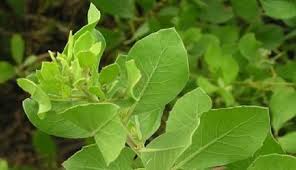
Beluntas is a much branched shrub, finely ribbed, soft and fluffy. Generally, this plant is grown as a hedge or even growing wild, can reach 3 meters if not pruned, so it is often planted as a fence yard. Beluntas can grow in arid areas in the soil is rocky and hard, on the lowland to highland at an altitude of 1000 meters above sea level, it requires quite a bit of sunlight or shade, and propagation can be done by stem cuttings on the trunk is quite old. Name area: beluntas (Malay), baluntas, baruntas (Sunda), luntas (Java), baluntas (Madura), lamutasa (Makassar), lenabou (East), while foreign names for plants beluntas is Luan Yi (China), Phatpai ( Vietnam), and Marsh fleabane (England). Beluntas simplicia name is Plucheacea folium (leaf), Plucheacea radix (root).

Morphology characteristics.

Leaves short-stemmed, located intermittent, sunsang egg-shaped, tapering circular ends. Edge serrated leaves, bright green, flowers out at the ends of branches and axillary, flower-shaped hump, handled or sitting, and purple. The fruit longkah somewhat shaped tops, colored brown with white angled.

Nature and Efficacy.

Beluntas leaves contain alkaloids, tannins, sodium, essential oils, calcium, flafonoida, magnesium, and phosphorus. While flafonoida and roots contain tannin. Beluntas leaves a distinctive aromatic smell and taste bitter and refreshing, nutritious to increase appetite, help digestion, shed sweat, eliminate body odor and bad breath, reduce fever, bone pain, back pain, and vaginal discharge; whereas beluntas roots efficacious as a laxative sweat and conditioning. Beluntas leaves can also be consumed as lalaban or steamed. Beluntas leaf essential oil content of 5% can inhibit the growth of Staphylococcus aureus, whereas the 20% level to inhibit bacterial growth Escherechia coli.

Benefits Leaves Beluntas For Herbal Medicine.

Beluntas leaf which is a small plant that is widely found in areas close to the coast. These plants live in a way that can easily grow wild and although not intentionally cultivated. Utilization beluntas leaves are widely used as a herbal remedy is quite powerful. Here are some benefits beluntas leaves for treatment:

1. Reduce Rheumatic sore.

Beluntas leaf properties it also can be used to reduce muscle pains in the body. Stiff often happens, will certainly be very torturing yourself. If having a stiff problem, then you should drink a decoction of leaves beluntas 3 times in 1 day.

2. Eliminate Body Odor.

Body odor is certainly a very annoying problem, especially for social life. Neither the women or men, would be very insecure when experiencing body odor problem. From now on not to worry because the leaves beluntas can be the solution of this problem. Drinking water regularly beluntas leaf decoction, then the body odor that happens to be resolved. Other herbal ingredients that are also able to overcome body odor such as:

3. Eliminating Whitish.

Beluntas leaves commonly known as a wild plant, widely used to treat vaginal discharge that is commonly experienced by women. Beluntas leaves can make whiteness becomes stop completely within a fairly short. In addition beluntas leaves, white turmeric benefits can also be used to treat vaginal discharge.

Other uses of the leaf beluntas very useful for women is because the properties that can make menstrual pain that is common to be reduced.

4. Eliminate Bad Breath.

The problem of bad breath can also be a constraint, especially for those who often conversing with others. If you experience this problem, it is advisable to drink water leaves beluntas or use as a mouthwash to overcome this bad breath. A number of benefits of fruits are also consumed to reduce bad breath such as:

5. Treat Pain Waist.

Many people who experience frequent back pain. This would greatly disrupt life, if it is constantly happening. Beluntas leaf decoction has pain relieving properties, especially in the waist area is. In some people, hip pain will greatly interfere with daily activities, and how to overcome them is to take a decoction of the leaves beluntas regularly. In addition, the benefits of water will also help reduce the risk of back pain that can occur.

6. Overcome Rheumatism.

For parents who have rheumatic problems, can try to consume the herb leaves beluntas. Usefulness can eliminate a wide range of pain, it can also be used to treat rheumatism.


7. Overcoming Stomach Bloating.

Beluntas leaves turns also be a solution when subjected to flatulence, so the discomfort of flatulence may soon disappear by drinking a decoction of the leaves beluntas.

To get this beluntas leaves, actually can be found easily in the area not far from the beach. Beluntas leaves are in the area and live in the wild, although only grows wild in the wild, but do not need to doubt the benefits of this beluntas leaves. Consumption beluntas leaves regularly to the perceived complaints can be reduced. But it is also necessary medical supervision when taking this traditional herb.


As Antibacterial ingredients and antioxidants.

Leaves beluntas according to research results have antibacterial and antioxidant function and have the potential to be developed as a preservative of food and medicine.

Beluntas (Pluchea indica L.), the name of this plant may be rare to hear. But, actually form this plant is not seasing name. If we look carefully, it is almost certain people will immediately know it as a plant that is often found on the home page, because it is often used as a hedge plant.

Beluntas the shrubs erect, woody, branched, with height can reach two meters. Single leaf, round egg shape, pointed tip, fluffy, young leaves are yellowish green and after the old pale green and leaf length from 3.8 to 6.4 cm. It grows wild on the ground with high humidity; in some places in West Java this plant is used as a hedge and a barrier between the mounds on the farm. Some areas in Indonesia the name beluntas with different names like baluntas (Madura), Luntas (Central Java), and Lamutasa (Makassar).

Beluntas leaf is traditionally used as a remedy for eliminating body odor, drugs reduces heat, cough medicine, and diarrhea. Beluntas boiled leaves are excellent for treating skin diseases. Besides, it leaves beluntas also often consumed by people as vegetables.

Their traditional information from people who have long used beluntas leaves as one of the medicinal plants to encourage researchers to conduct various studies in order to scientifically prove his usefulness. In this paper will be tested for exposure to two studies in the form of utilization beluntas leaf extract as an antibacterial component and essential oils as antioxidants.


Beluntas as antibacterial leaf extract.

To get beluntas leaf extract to be dried, subsequent extraction. Extraction is done using hexane, the resulting residue extracted back with ethanol to extract the polar defatted with reflux method. Besides direct extraction using ethanol to extract the polar non defatted using the same method extracts for antibacterial activity test carried out on bacteria from the group of pathogens causing food poisoning sepertiEscherichia coli, Salmonella typhi, Staphylococcus aureus, and Bacillus cereus. Besides E. coli is a bacterium that causes gastrointestinal infection, while S. aureus is the bacteria that cause impetigo (swelling of the epidermal layer of the skin), furuncle (inflammation in the sub-cutaneous tissue), and the carbuncle (widespread inflammation and the hair follicles). Of the group of bacteria that cause food decay adalahPseudomonas fluorescens. Testing for antibacterial activity using the well diffusion method; the clear zone around the well demonstrated antibacterial activity. Davis Stout argues that the provisions of the antibacterial strength is as follows: the area 20 mm or more barrier means very strong, regional barriers to 10-20 mm (strong), 5 -10 mm (medium), and area constraints 5 mm or less (weak).

Table 1. Antimicrobial activity of leaf extract beluntas *
Bacteria (Extract Nondefatted) (Extract Defatted)
Escherichia coli (8.5 +/- 0.5) (7.0 +/- 0.4)
Salmonella typhi (10.2 +/- 0.4) (8.2 +/- 0.5)
Staphylococcus aureus (9.1 +/- 1.0) (7.1 +/- 0.6)
Bacillus cereus (8.4 +/- 0.7) (6.5 +/- 0.3)
Pseudomonas fluorescent (6.3 +/- 0.3) (5.5 +/- 0.3)

In the table above shows that the extract nondefatted show inhibitory activity higher than the defatted extract. If the data in the table associated with the provision of antibacterial powers proposed by Stout, then the antibacterial powers contained in the extract of leaves beluntas into the category of "moderate" (included in the range of 5-10 mm). Although the antibacterial strength in the medium category, can be understood when the leaves beluntas efficacious cure various diseases caused by bacterial infection.

Leaves beluntas as antioxidants.

Research conducted by the Sri Widyawati Paini (2005) tried to examine the antioxidant activity of leaf beluntas. Beluntas leaves extracted using ethanol by soxhlet method and water method hidrodistilasi. Furthermore, each extract, both of method and hidrodistilasi soxhlet tested for their radical scavenging activity DPPH (2,2-diphenil-1- picrylhydrazil radical), the antioxidants in the extract and essential oil will react DPPH beluntas leaves and turn them into alpha, alpha- diphenyl-beta-picrylhydrazine. Changes absorption produced by the reaction is a measure of the antioxidant capability of leaves beluntas. As a comparison used TBHQ (tertiary butyl hydroquinone) and υ-carotene which has generally been used as a commercial aktioksidan.

The results demonstrated the following successive beta-carotene> Essential oils beluntas> extract beluntas> TBHQ. From this data it can be said that the leaves beluntas have potential as natural antioxidants and can take the place of TBHQ and beta-carotene as an antioxidant.

Potential applications beluntas leaves as a food preservative and medicine.
Of use of the antimicrobial compound / antibacterial function as preservatives, also an antioxidant that works to prevent oxidation, thus preventing the food product from damage due to exposure to air and light, has been largely derived from synthetic chemicals. Based on the research of these materials can cause negative health impacts. As an alternative solution can be to use natural ingredients that has the advantage because it is safer for consumption.

From the data mentioned above it can be concluded that the leaf has the potential fatherly beluntas developed as an extract that serves as a food preservative, for the ability to inhibit the growth of bacteria causing food poisoning and bacteria that cause food spoilage. Besides, it is also his ability as a radical scavenging activity can be used as an antioxidant compound.

There was also potential beluntas leaves can be used also as an anti-inflammatory agent (inflammation) and diarrhea due to its ability to inhibit the growth of S. aureus and E. coli.
Thank you for reading this article. Written and posted by Bambang Sunarno. sunarnobambang86@gmail.com
author:
https://plus.google.com/105319704331231770941.
Name: Bambang Sunarno.
http://primadonablog.blogspot.com/2016/02/about-beluntas.html
Date Published: February 06 2016 at 11:03
Tag : Beluntas.
Code : 7MHPNPADAEFW

Posted by: Bambang Sunarno
www.Primo.com Updated at: 11:03

Animal Eye position.


An assortment of animal eyes.
Eyes useless to see. But did you know that there are animals who do not have the eyes and on the contrary there are animals whose eyes up to eight?

God has set it. His imaginary creature's eyes adjusted to its usefulness. Therefore the ability and placement tailored to their needs.

Some are created by Him for the night there for the day or for both. Some are for the purpose of attack or otherwise nothing to defend himself. Each of it has its drawbacks and advantages.

Eye squirrel.

Squirrel or Squirrel eyes are on either side of his head, and is located on both his cheeks are shaped sloped forward and resembles a cone. Thus it has an inside edge towards the front.

But the location of the eyes was quite close to the base of the head that ran through his head as he climbed a tree he could see through the back of pursuit or not.

Or while running on the ground he can look up to oversee the hawk chasing him. But besides the advantage that he has a weakness that can not be viewed easily sideways.

Eagle eye.

Mata eagles have incredible eyesight to hunt. He can see a rabbit hopping among bushes thousands of feet below.

Rabbit eyes.

But the rabbit hunted have eyes on both sides of his head which place such that it can see eagles were hunting and being swooped for snatched. Now living animals which are lucky.

Owl Eyes.

Owls have eyes located not like birds' eyes in general, ie on both sides of the head, but in front of his face. His eyesight is very sharp and can clearly observe their prey in the dark of night or in overcast condition.

But in order to determine where the prey he prefers hearing. He can pinpoint the exact position of the mice from the noise of leaves disturbed by the movement of the prey rat.

Owl hunter at night has a great eye at all, so great that his eyes can not be driven in the eye sockets.

To look to the side he must rotate his neck, and he can do to look back though. Apart from that his eyes were sharp so that in the dim light, which the human eye can not malihat anything, he can find their prey.

Birds Eye Robin.

Robin bird, bittern Murai yamg in Europe are not able to see things clearly that are a few centimeters in front of him. In order to medilihat clear, prey it must be at some distance.

To be able to see their prey, such as a worm, he straightened up and moved his head toward the back, so that her eyes were there at a distance "can see".

It seems like people are farsighted, to see objects clearly (for example to be able to read) the farsightedness that should keep it a few centimeters from him.

Cat eye.

Cats are pets that really we enjoy doing. He included the beast "noctural" is an animal on the hunt both during the day and at night.

Therefore, the cat's eye can adjust both for daytime and for evening. Pupils (pupil) is not round like most other binatang-, but elliptical (oval). On the evening of the oval shape being wide open to strong light or bright shrink up into the shape of a gap.
Cat eyes would glow (like a fire) when highlighted strong light, because the back of the eye that there is a layer of membrane that works like a mirror that reflects back the light that hits. Other than that it was within its eye cells are very sensitive to dim light. But the cells can not distinguish colors alias color blind.

Fish eye.

Both of our eyes it is a unity, glancing together in the same direction and saw the same thing anyway. Similarly, in mammals and birds. But is not the case in fish, especially fish that is flat, the eyes that are on the left and right of the head.

In the group of fish (as well as in the chameleon) Mataya both worked each freely, independent of one another, for example, toward the front of the left eye right eye being led to the back.

Thus it can cover the distance vision and a wide viewing area, because it can see the secaara two different directions simultaneously. Fish do not have eyelids, so can not blink (always glares). Thus water can always be membersikannya and therefore his eyes are always clean.

Spider eyes.

Eye spider is a combination of several eye. Each eye has a lens and recipient cells light beam so that it looks like facets separated and are usually arranged in groups or clumps on the back of his head.

Spider catches its prey with webs and wait for prey trapped, not so dependent on sight like a spider hunter. Therefore, it is not a problem for him nearby the myopic nature.
Spider hunter has clumps eyes composed of eight eyes are on her back. Each eye lens fitted and cells that can capture light beam.

Although there was a spider who can see clearly an object that is located at a distance of more than 30 cm, spider hunters can follow the slightest movement of the shadow of prey who move from one currency to the next eye.
Thank you for reading this article. Written and posted by Bambang Sunarno. sunarnobambang86@gmail.com
author:
https://plus.google.com/105319704331231770941.
Name: Bambang Sunarno.
http://primadonablog.blogspot.com/2016/02/animal-eye-position.html
Date Published: February 06 2016 at 09:13
Tag : Animal Eye position.
Code : 7MHPNPADAEFW

Posted by: Bambang Sunarno
www.Primo.com Updated at: 09:13

About Platypus.


 Platypus.
Platypus is a semi-aquatic animals are mostly found in the eastern part of the continent of Australia. Although the egg-laying platypus but he belongs to the mammal class because she was breast-feeding her child. Platypus has unique characteristics that have venom like Snake Has mouth and lay eggs like a duck and swims like an otter.

Platypus also commonly known as the duck-billed platypus or duck-billed platypus is due to its shape that resembles a duck. Platypus including a strange beast of the kingdom Animalia.

Platypus was first discovered by a British scientist, George Shaw, in 1799. He estimated that this animal existed since the dinosaur age. Platypus name itself comes from the Greek and Latin that means flat feet.

Animals are very unique because it is the only mammals that lay eggs and breast-feeding, or in biological terms is called ovovivipar.dan have to like
snake, had a mouth like a duck and has feathers like a beaver

Physiology.

Platypus body temperature of approximately 32 degrees Celsius. This temperature is lower than most mammal (about 38 degrees Celsius). Platypus body covered in brown fur that keep their bodies warm.

Platypus webbed feet like a duck. Platypus also had a beak like a duck. Part of this is used as sensory organs.
Platypus weight ranges from under 1 kg to more than 2 kg. The body length of 30-40 cm and a tail length of about 10-15 cm (males) and 8-13 cm (female). Male platypus up to 3 times larger females.

Platypus also are animals beranun. This toxin is used in turf battles or battles between friends.

Ecology.

Platypus is nocturnal and semi-aquatic. Platypus is a good swimmer and spends much of his time in the water to search for food. When swimming, Platypus shut his eyes tightly and leave the rest to the other senses.

Fourth Platypus webbed feet. When he swam, he pedaled by using her front legs. And to maintain the balance of the body used his tail and hind legs. Platypus eat worms, insect larvae, and yabbie dug or he caught while swimming.

Platypus has four legs which are arranged horizontally in the body. It serves to movement on land. Membrane on its front legs have a size large enough to help him swim in the water. Platypus swim by moving the front leg.

Facts About Platypus.

In the 1990s, many people hunt the platypus for its coat. But this time, the platypus is included in the animals protected by the Australian government. Their population also decreases. That's because a lake or stream where they live many contaminated.

If she was walking on land, its membrane will be folded into and replaced with claws digunakkannya for a walk and explore the land. Walking the rear also has claws to control his body while swimming. The paws can also be used withhold his food as he dug and to keep his fur to keep them dry

Platypus usually looking for food in the water with diving in water for 1.5 minutes. He is looking for prey menggunakkan half of which has a sensor to detect motion.

Reproduction.

Platypus lay eggs like a reptile egg, and a little rounder than bird eggs. Platypus females usually lay two eggs at the same time. Although sometimes allow Platypus females spawn one or three eggs.

Its incubation period is divided into three parts :

The first phase - The embryo does not have any functional organs and relies on a red egg sac to breathe.
The second phase - the toes start to appear.
The third stage - Dental appear. The eggs hatch after an incubation period that lasts about 10 days. After the eggs hatch, the baby came out Platypus hairless is directly attached to the parent. The parent will then nursing her child who was blind and insensitive. Platypus baby will leave the nest after the age of 17 weeks (approximately 4 months through). Platypus reproductive organs resemble birds (Aves). Female platypus has an ovary consisting of the right ovary and left ovary where the ovaries do not grow perfectly right (the same as the bird).
Thank you for reading this article. Written and posted by Bambang Sunarno. sunarnobambang86@gmail.com
author:
https://plus.google.com/105319704331231770941.
Name: Bambang Sunarno.
http://primadonablog.blogspot.com/2016/02/about-platypus.html
Date Published: February 06 2016 at 08:24
Tag : About Platypus.
Code : 7MHPNPADAEFW

Posted by: Bambang Sunarno
www.Primo.com Updated at: 08:24