Tuesday, 16 June 2015

Did you know Samurai.

original Japanese samurai sword.
Samurai (侍?), Or in Japanese is called bushi (武士?, [Bu͍ꜜ.ɕi̥]) or Buke (武 家?), Is the military nobility of medieval and early-modern Japan. According to translator William Scott Wilson: "In Chinese, the character 侍 is a word that means waiting or accompany someone in the ranks of society, and this is also true of the original term in Japanese, saburau. In both countries the term usually means" those who serve present close to the nobility, "the pronunciation later changed to Saburai, according to Wilson, the initial reference to the word" samurai "appears in the Kokin Wakashū (905-914), the first imperial anthology of poems, completed in the first part of the 10th century. At the end of the century 12th, samurai became almost entirely synonymous with bushi, and the word was closely associated with the middle and upper class warrior. Samurai followed a set of rules that came to be known as Bushido. samaurai although still less than 10% of the Japanese population, their teachings can still be found to this day both in daily life - today and in modern Japanese martial arts.
More appropriate term is bushi (武士) (literally: "gunmen") used during the Edo period. However, the term used for samurai warrior elite of the nobility, and not for example, ashigaru or foot soldiers. Samurai were not bound by clan or working for an employer (daimyo) called ronin (literally: "the waves"). Samurai who served in the han called Hanshi.
Samurai should be polite and educated, and during the Tokugawa shogunate gradually lost their military function. At the end of the Tokugawa era, samurai in general is a general stooge for the daimyo, with their swords only for customs purposes. With the Meiji reforms in the late 19th century, the samurai class was abolished as a distinct and replaced with a national army resembles a Western country. However, the nature of strict samurai known as bushido still present in today's Japanese society, as well as aspects of their way of life to another.

Etymology.

Samurai words came in before the Heian period in Japan where when someone is referred to as Saburai, it means he is a messenger or a follower. Only at the beginning of the modern era, especially in the Azuchi-Momoyama era and the beginning of the period / the Edo era in the late 16th century and early 17th century Saburai words exchanged words replaced with samurai. However, at that time, meaning that it has long changed.
In the era of the samurai, the term early yumitori ("Archer") is also used as an honorary title for a small number of warlords, although swordsmen have become more important. Japanese archer (kyujutsu), is still closely associated with the war god Hachiman.
Here are some other terms samurai.
Buke (武 家) - Expert martial
Kabukimono - Words of kabuku or skew, he refers to a colorful samurai style.
Mononofu (も の の ふ) - last term which means commander.
Musha (武 者) - Form of summary Bugeisha (武 芸 者), literally. martial arts expert.
Si (士) - Letter substitute kanji samurai.
Tsuwamono (兵) - The term set for soldiers who make haiku by Matsuo Basho in its top. The literal meaning is a strong person.

Weapons.

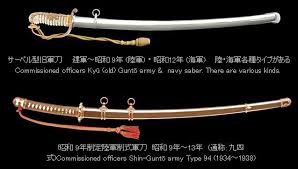
Samurai use several types of weapons, but the katana is the weapon that is identical to their existence, In Bushido teaches that the katana is the spirit of the samurai and sometimes illustrated that a very dependent on the katana samurai in battle.  They believe that the katana is very important in giving honor and the inner life. The term for katana unknown to mass Kamakura (1185-1333), before that time the Japanese sword known as tachi and uchigatana, and the katana itself is not a major weapon to mass Edo.
When a child reaches the age of thirteen, there are ceremonies that are recognized as Genpuku. Boys who undergo genpuku got a wakizashi and an adult name to be formally samurai. This may imply he was given the right to know katana although usually tied with string to avoid accidentally unsheathed the katana. Couples katana and wakizashi recognized as Daisho, which means large and small.
Another weapon is a samurai yumi or composite bow and used for several centuries until the influx of guns in the 16th century. Japanese model composite bow is a great weapon. The shape allows to use different types of arrows, such as flaming arrows and arrow cues that can reach targets at distances over 100 meters, even more than 200 meters when accuracy is no longer taken into account, this weapon is usually used by standing behind Tedate (手盾) is a large wooden shield, but it can also be used by horseback. Exercise archery behind the horse became Shinto customs, Yabusame (流 鏑 馬). In the battle against the Mongol invaders, the composite bow became a weapon winner, The Mongols and Chinese at that time wearing a composite bow with a smaller size, especially with the limitations in the use of cavalry.

Interesting Facts About Samurai.

Interesting facts about these samurai may not know. Is a legendary samurai warrior, and perhaps is a class society that is quite popular in Japan in antiquity. They are noble fighter against crime (and fight each other) with sword and armor are frightening, and follow the moral code that guides their lives. And below are 6 interesting facts about samurai who may have never heard of.

Samurai Woman.

Although the "samurai" is a masculine term, class "bushi" (social class samurai) Japan also showed women who received training in martial arts and war strategy. The woman called the "Onna-Bugeisha," and they are known to have participated in the war, together with the men. They usually are naginata weapon, the spear which has a curved blade tip, which is quite flexible and lightweight.

Armor.

Weirdest thing about samurai armor they probably are too many decorations. Even so, each section has a function of each. Unlike clothes pilgrimages European knights, samurai armor is designed for mobility. Samurai armor to be rigid, but must also be flexible enough so that users can move freely on the battlefield. Armor made of lacquered plates, of leather or metal, and carefully tied with leather straps or silk.

And most bizarre of part of this armor is Kabuto helmet. The "bowl" was made of metal plates, as well as face and forehead covered by a piece of armor that is tied around the head and back of the helmet. The most notable features of this armor is protective neck, where clothing Darth Vader, the antagonist character in the film Star Wars, inspired by this samurai armor. This section protects the wearer from arrows and swords were coming from all directions.

Same-Sex Relationships.

Not many know that the samurai is a group that has a very open mind toward sex. The withdrawal of Sparta, Greece, the samurai is not just accept same-sex relationships, they are even encouraged to do so with one another. This relationship is usually formed between young samurai with a samurai who has experienced. And reported that all members of the samurai class has been doing it. In fact, the relationship is quite common even sesame-daimyo would feel shame if he does not do this.

Fashion Samurai.

Samurai used to be a trend in his time. Style and way of dressing they greatly affect the fashion trends of the time. Even so, the samurai themselves do not dress to impress others. Every aspect of their garments are designed to meet their needs as a fighter. Samurai clothes designed for speed, so convenient for traveling, as well as freedom of movement.
And the part that most distinguishes samurai with others is the style of the famous crest signs. Except for Buddhist monks, everyone, in all social classes use this samurai hair style.

Samurai weapons.

As a soldier, samurai using several different weapons. They were originally using a sword called "chokutō," medieval knights sword leaner and smaller.
As the development of the technique of making swords, samurai then switch to using a curved sword, which eventually evolved into the "katana."
Katana sword is probably the most famous kind in the world, and the most iconic weapon of all weapons of samurai. Bushido dictate that there is in the soul samurai katana, which makes katana become the most important weapon for the samurai. Katana is usually paired with a pair of small sword named "daisho," which is symbolized as an exclusive status symbol which is only used by the samurai class. Thank you for reading this article.
Written and posted by Bambang Sunarno. sunarnobambang86@gmail.com
author:
http://schema.org/Personal.
https://plus.google.com/105319704331231770941.
name: Bambang Sunarno.
http://primadonablog.blogspot.com/2015/06/did-you-know-samurai.html
DatePublished: June 16, 2015 at 12:19
Tags : Did you know Samurai.
Code : 7MHPNPADAEFW

Posted by: Bambang Sunarno
www.Primo.com Updated at: 12:19

Friday, 12 June 2015

Discus Fish recognize Closer.

The lovers of ornamental fish, if you want to know more about discus fish? This fish is very popular even for the beginners in the field of ornamental fish.

If you want to know in advance the types of freshwater fish a good idea to read the introduction of the kinds of freshwater fish first. Well we will go to the topic of discussion on the following discus fish.

Discus fish.

Red melon Discus fish.
Symphysodon discus commonly known as a genus of cichlids that comes from the river Amazon. Fish body shape is unique and has a bright color caused discus fish are popular as aquarium freshwater fish. This fish is also popular in Indonesia to decorate aquariums at home.

There are three types of fish are popular among other Symphysodon genus Symphysodon aequifasciatus (Blue discus), Symphysodon discus (Red disc or Heckel discus), and Symphysodon tarzoo.

Discus fish live in the Amazon river. These fish live in the tropics and has a high diversity. Discus fish species have a deployment / distribution different.

Discus fish have a body shape that is flat, disc-shaped pieces. On the chart of the body side are motifs in green, red, brown, and blue. Height and length of each fish 20-25 cm.

Red fish discus (red melom, red cover) female has a redder color than the males. Another characteristic possessed Discus fish are those concerned with the larvae of fish produced. Most fish brooding cichlid genus there is a relationship between the child and parent to child. Discus adult issued secretion of the skin for her children who are still in the form of larvae.

Discus fish are very popular among lovers of ornamental fish. This fish became an important industry for the cultivation of ornamental fish in regions of Asia. Are friends ornamental fish lovers interested in discus fish? Or keen to cultivate fish discus?

Discus fish.

Symphysodon discus come from the waters of the Amazon. Discus-called because of its shape like a disk (disc) with attractive colors. The carrying of freshwater fish is very quiet and gentle movements, so-called king of the aquarium. The biggest fish can reach a diameter of 15 cm.
Discus fit cultivated in tropical climates with water temperature 25-30oC. For maintenance in the aquarium should be a little patient, because the discus fish is stressed.
     

Taxonomy.

Discus classified in Symphysodon, which now encompass three species: ordinary Discus (Symphysodon aequifasciatus), Heckel Discus (Symphysodon discus), and new species are yet to be named that is Symphysodon tarzoo. However, a further study published in 2007 Ogos reserve the genus THAT classed in the species: S. aequifasciatus (green disc), S. haraldi (regular disc / blue / war) and S. discus (Heckel Discus). Both studies back up the three species; with the exception will be the scientific names for each of them.
     

Appearance.

Epertimana cichlid genus Pterophyllum, all of Symphysodon species has a flattened body. Contrary to Pterophyllum, which makes prominent dorsal body shape Symphysodon as if round. Of body shape is the name "disc" was published. Side of this fish usually have motifs in green, red, and blue war. Height and length of mature fish is approximately 20-25 cm (8-10 in).

Breeding.

Other characteristics Symphysodon species are guarding them would larvae. Climb into the process will take a period of two weeks and so the eggs will start to hatch after two or three days after the eggs of male and female compounded. Like most cichlid fish, childcare done by both female and male fish. Additionally, adult discus issued secretion through the skin, which depend larvae live in the first few days. This behavior can also be observed in Uaru species. However, for breeding in captivity, the larvae will depend on the life of mother and father for a few weeks.

Location and Habitat.

Symphysodon species inhabit the lakes-lakes and rivers in lowland floodplain of the Amazon river, where it is a part of the Neotropical fish.

Three species of Symphysodon have differing geography sprinkles. S. aequifasciatus be found in the Rio Solimões, Amazonas and Rio Rio Putumayo-Ica in Brazil, Colombia and Peru. In contrast to the sprinkling of S. discus that may be encountered with in downstream rivers Abacaxis, Rio Negro and Trombetas. S. tarzoo be found in the upstream Manaus in the western Amazon.
Thank you for reading this article. Written and posted by Bambang Sunarno. sunarnobambang86@gmail.com
author:
http://schema.org/Personal.
https://plus.google.com/105319704331231770941.
name: Bambang Sunarno.
http://primadonablog.blogspot.com/2015/06/discus-fish-recognize-closer.html
DatePublished: June 12, 2015 at 11:43
Tags : Discus Fish recognize Closer.
Code : 7MHPNPADAEFW

Posted by: Bambang Sunarno
www.Primo.com Updated at: 11:43

Do You Know Angelfish.

Butterflyfish.
Butterflyfish are a group of tropical marine fish of the family Chaetodontidae brightly colored; flag fish and coral fish are also included in this family. Most are found in coral reefs in the Pacific, Indian and Atlantic, butterfly fish consists of about 120 species in 10 generations. A number of species pairs in the Indian and Pacific oceans, members of the genus are large, Chaetodon, and their taxonomy is often felt confused by what species of this genus are considered a species or subspecies. A recent study using data from DNA sequencing to answer many of these questions. Many subgenerasi also been proposed to divide Chaetodon, and now it becomes clear how the genus should be divided if it desired.
Butterfly looks like a small version of the fish injel (Pomacanthidae), but unlike injel fish, butterflyfish preoperkulum not have spines on the gill cover. Some members of the genus Heniochus like Moorish Idol (Zanclus cornutus) from the family monotipik Zanclidae. Among the "Perciformes" which parafiletik, injel fish may not be too far related to butterflyfish, whereas Zanclidae seem more distant.

Description and ecology.

Butterfly fish are generally small, mostly 12 to 22 cm in length. The largest species, striped butterflyfish and the saddle butterflyfish, C. ephippium, grows up to 30 cm. Her name refers to a light-colored body and figured prominently in many species, with a touch of black, white, blue, red, orange, and yellow. But some ordinary colored species. Many butterfly that 'eye spots' in his side and dark bands that pass through their eyes, similar to the pattern seen in the wings of a butterfly. Flat round body is easily recognizable in the abundance of coral reef life, so that people think that the striking color was intended for interspecies communication. Butterfly butterfly fish dorsal fin is not divided, rounded tail fin or appear truncated but not branched.
Generally active during the day and are often located in the shallow water depth of less than 18 m (although some species down to 180 m), butterfly generally tied to specific habitat range. Butterflyfish coral eaters are generally territorial, form mating pairs and their own claim ownership over coral. In contrast, eating zooplankton form the group of large numbers of species. At night, butterfly hiding among the corals and crevices and show different body colors from color during the day.
Their color also makes fish butterflyfish popular aquarium fish. However, many species eat corals, polyps and anemones. This poses a problem in most reef aquarium where delicate balance must be maintained. Therefore, the species is maintained at a hobby or a common food species specialist zooplankton eaters.
Butterfly fish is a fish that spawn pelagic, ie they produce a lot of eggs that float which later became part of the plankton, drifting drift until hatch. Her son through a stage called tholichthys, where the body of the fish covered pascalarva large slab of bone that extends from the head. The bone slab disappear when they grow up. Phase protected such slab was only seen in one other fish families, scat (Scatophagidae).

Taxonomy, systematics and evolution.

Name familia butterfly fish comes from the Ancient Greek word Chaite ("Hair") and odontos ("teeth"). This refers to the rows of teeth-like brush in his mouth.
Chaetodontidae can be divided into two lineages that may be considered as subfamilia. However this is not finished, and the subfamily Chaetodontinae name not be used because he is a relic of a time when Pomacanthidae and Chaetodontidae combined in Chaetodontidae as one family. Therefore, Chaetodontinae now considered a junior synonym of Chaetodontidae. In any case, one lineage Chaetodontidae (in the modern sense) consists of a butterfly "typical" around Chaetodon, while others combine the fish genus flag and coral fish. Because "Perciformes" very parafiletik, the exact relationship of Chaetodontidae overall less known.
The fossil record of this little group of fish. This is due mainly to the fact that they are limited to staying in the reef where the carcass is eaten by scavengers, offset by excessive growth of coral, even if they were fossilized likely sooner or later erosion will destroy their fossils. However, there Pygaeus, very basal fossils from the Eocene epoch-middle end of Europe, dating from the Bartonian 40-37 million years ago. So Chaetodontidae may come from middle-early Eocene. Molecular clock combined with the evidence given Pygaeus allows placement of the initial separation between the two major lineages until late-middle Eocene, along with several other fossils, allowing it to conclude that most of the living genus may now be different at the end of the Paleogene 23 million years ago.

Generation.

Line-fish coral fish flag can be further divided into two groups; this may be considered Tribus but not yet officially named. Genera listed sequentially or based phylogenetic calculated, from the most ancient to the youngest:

Flag fish / coral fish line 1:

Amphichaetodon
Coradion
Chelmon
Chelmonops

Flag fish / coral fish line 2:

Forcipiger
Hemitaurichthys
Heniochus
Johnrandallia Nalbant 1974 (including Pseudochaetodon)
Butterflyfish "typical" may consist of more genera; Chaetodon see article for details:
Chaetodon (including Parachaetodon and Roa)
Prognathodes (sometimes incorporated into Chaetodon).

Know the Moorish Idol fish By Easy.

Who does not know the fish moorish idol? Fish that are well known everywhere as a beautiful ornamental fish exquisite. Moorish idol fish has become a trend among lovers of ornamental fish aquarium fish because it has its own beauty both in terms of shape, shelter, color, size and many more that makes this fish to be excellent ornamental fish lovers. Now therefore the author here will discuss moorish idol fish in full in this short article to the reader all in order to know more again on this fish.
For some people Indonesia called butterfly fish. Butterfly fish are fish that the environment is in shallow tropical seas. Usually these fish are in depths of less than 18 meters because there are corals which became the main food of these fish. Nonetheless, there are number of little fish that plunge to depths of 180 meters. Her life in the more shallow coral reefs make it a place of life. These fish have a body that is small between 12 to 22 cm. It draws from moorish idol fish are active they are often good for swimming to and fro or foraging in the form of zooplankton during the day only, while in the evening they will break. Striking colors and varied body is able to provide its own beauty especially if kept in an aquarium but it will be dangerous if your aquarium containing coral reefs because the fish will be eaten away by this.

Moorish idol fish could be an option as ornamental fish in your aquarium because of its beauty. The downside is that the fish will eat the coral reefs in the aquarium if you put it. It's enough just to be authors explain, hopefully article about moorish idol fish know this can be useful for you all who read it in general as well as helping you to keep this fish with both specific to the aquarium and ornamental fish hobbyists. Thank you for reading this article.
Written and posted by Bambang Sunarno. sunarnobambang86@gmail.com
author:
http://schema.org/Personal.
https://plus.google.com/105319704331231770941.
name: Bambang Sunarno.
http://primadonablog.blogspot.com/2015/06/do-you-know-angelfish.html
DatePublished: June 12, 2015 at 10:16
Tags : Angelfish.
Code : 7MHPNPADAEFW

Posted by: Bambang Sunarno
www.Primo.com Updated at: 10:16

Know Koi.

Koi (鯉?, English / kɔɪ /, Japanese: [koꜜi]) or in specific koi comes from Japanese, which means carp. More specifically refers to nishikigoi (錦鯉?, English /niɕi̥kiꜜɡo.i/), which is less meaningful carp were embroidered in gold or silver. In Japan, koi became a kind of symbol of love and friendship. This is because the koi are homophones for words that also mean affection or love. Koi fish is a kind of fish including carp (Cyprinus carpio) which has a very beautiful ornaments and benign. Koi are usually maintained as a garnish with the aim keindahkan and good luck in the home and outside the home (koi pond or water garden, because the koi fish is believed to bring good luck. Because the koi fish very close related to goldfish, and therefore in Indonesia, many people call fish koi carp.
Koi fish species differentiated depending on the color, pattern, and size. Some elements of the color is white, black, red, yellow, blue, and beige. The most well known types of koi is the kind of '' Gosanke '', which is made up of the Kohaku, Sanshoku Taisho, and Showa Sanshoku.

Type - the type of Koi.

Koi carp culture as ornamental fish originally came from Japan. Actually koi carp is the result of crossbreeding of multicolored goldfish (carp). Many years ago, farmers in Niigata Japan needs a source of protein during the long winter. They maintain the carp in the pond until they reach a certain size. In the end, the farmers realized that some of the carp have different colors, so that they continue to nurture and upbringing. From there the beginning of koi fish farming started so until several hundred years later progressing quite rapidly.

As the development of fish farming koi, koi fish species undergo development and growth into many types. The types are based on the color pattern koi, scales and others. In the end a lot of the types of koi fish koi fish arranged in a classification as identification. In each class there are several sub-categories are also quite a lot of variety. Koi fish are common classification consists of Koi types Gosanke, Shiro, Utsurimono, Asagi, Tancho, Hikarimono, Goromo, Hikarimoyo, Matsuba, and Kawarimono.

Some types of koi :

1. Gosanke

Koi Koi Gosanke classification is the most popular and commonly found among the fans Koi. Which are included in this category is the Kohaku, Sanke, and Showa. Family Gosanke a Koi combination with the color black, red and white. Except Kohaku who do not have an element of black color.

Kohaku
Kohaku Koi with a red and white colors. Red pattern called Hi. Hi should be thick with good edge. There are various differences in color pattern Kohaku. There are broken, there is a large and sweeping. Kohaku is good to have a pattern that does not go down past the eyes and balanced.

Sanke.
Sanke is the Kohaku koi like pattern (black and white), but they have a black pattern along their backs. Black pattern called Sumi. Looking for a good Sanke is like having a Kohaku Hi pattern. Black pattern may not appear on the head. Sanke is a cross Kohaku with Shiro Bekko.

Showa
Showa Koi color is White, Black and Red. Showa is usually the result of a cross between a Kohaku and Shiro Utsuri.

2. Bekko.

Shiro Bekko.
Shiro Bekko is a kind of white-skinned Koi with a black pattern of small pieces. Pattern (black) sumi on Shiro Bekko to be balanced and have sharp edges (Kiwa). Utsuri and Shiro Shiro Bekko have similarities, because the pattern of the same color. And the difference between Bekko Shiro Shiro Shiro Utsuri is on Utsuri has a pattern of black color larger black while Shiro Bekko have a little black.
Ki Bekko

Koi Ki Bekko is yellow with black pattern on it. As well as Shiro Bekko, but the basic color is bright yellow. Pattern (black) sumi on Ki Bekko to be balanced and have an edge (kiwa) sharp. Ki Bekko somewhat rarer than its cousin, Shiro Bekko.
Aka Bekko
koi Akabeko
Aka Bekko a red koi with black pattern on it. The black color form an interesting and beautiful spot.

3. Utsurimono.

Shiro Utsuri
Shiro Utsuri, a black and white koi with a unique color pattern and interesting. The head Shiro Utsuri consists of black and white, should not only consist of one color (Black only or white only). In contrast to shiro Bekko, shiro Utsuri a koi with black warnadasar.
Ki Utsuri

Ki Utsuri almost the same as Shiro Utsuri, only the Ki Utsuri color is yellow and black. Color pattern and the same assessment criteria with Shiro Utsuri.
Hi Utsuri

Hi Utsuri a Koi with red and black colors that form a unique and interesting pattern.

4. Asa

Asagi.
Asagi is a type of koi that has long existed. Asagi Koi blue with a red belly, beauty Asagi is on the main pattern that is scales that look like a pattern in the form of a thin net over the base color indigo. Ideally Asagi has a pure white head.
Shusui

Shusui is a type of family Asagi koi but do not have scales. Scales on Shusui only on the back only. Color scales are ideally dark and there along the back completely and neatly.


5. Tancho

Tancho Goromo.
Tancho Goromo is a koi that has a spherical pattern on the head, which is a pattern Goromo / wine.
TANCHO Kohaku

Tancho Kohaku are white koi with a red circle on the head. The more rounded and sharply increased the beauty of this type of koi.
TANCHO Goshiki

Tancho Goshiki has Tancho pattern on the head with color and body scales are kind Goshiki koi.
TANCHO Kujaku

TANCHO Sanke

6. Hikarimono

Hikarimono is metallic Koi or Koi with shiny golden color. Hikarimono color is a single color such as yellow sheen, orange and others. Also called Hikarimuji. Hikari means shiny.
Nezu Ogon, Koi with gray sheen
Orenji Ogon, Koi with orange sheen
Platinum Ogon, Koi gleaming white / silver
Yamabuki Ogon, Koi Color Yellow sheen

7. Goromo

Ai goromo
Budo Goromo
Sumi Goromo

8. Hikarimoyo

Kin Showa
Kujaku
Yamato Nishiki
Doitsu Hariwake
Kikusui

9. Matsuba

 Shiro Matsuba
Aka Matsuba

10. Kawarimono

Ochiba Shigure
Kumonryu
Beni Kumonryu
Benigoi
Karasugoi

11. Haijiro

Aka Haijiro
Chagoi
Kigoi
Midorigoi
Soragoi.

How To Maintain And Maintain Good Fish Koi.

Caring for and maintaining good Koi fish a must for hobbyists. Basic staple to keep in mind is an appropriate, within their water and feeding techniques.

Suitable Koi fish pond.

Koi fish can be kept in the pool cement, ground pools, garden ponds. Maintenance of koi fish in the aquarium is not recommended. Because koi need a broad and deep swimming area. In addition, koi beauty lies in the colorful back. If elegance is maintained in the tank body and the color does not look up.

Koi pond size is recommended at least 1.5m x 2m depths of 80-50cm. If pools are too shallow, the fish bodies will be constantly in contact with sunlight. Too much sun can change the color of koi body so pale and stunted growth.

Noteworthy distance to the lip of the pool water of at least 25cm is useful to prevent koi jump to the mainland. Swimming should be equipped sewer at the bottom. At the top of an installed pipes to deliver clean water that has been deposited.

Water For Fish Coins Good.

Filter four layers need to be installed to maintain cleanliness and smooth supply of water. Filters are four layers

- The first filter is composed of gravel, sand, and palm fiber filter function littering rubbish and mud pools.
- The second form of carbon zeolite filter function removes toxins, odor, and kill germs.
- The third filter in the form of non-lethal pesticide-degrading bacteria that play a role in the process of water purification pond.
-Filter Fourth form of plants or rocks that can bind to dirt.

The degree of acidity (pH) of water that is suitable for the growth of koi is from 6.5 to 8.5. To maintain the water circulation pump can be installed capable of delivering as much as 25 liters of water per minute. In this way, the pool water does not need frequent cleaning, but need to clean the filter and filter tub. How, spray filters with clean water about 5-10 minutes.

When using this filter, you should do the replacement of water every two weeks. The goal is to get rid of toxic substances from the leftovers are decomposed into nitrite are harmful to fish health.

Koi Fish Feeding way.

Feed serves to form an ideal body and brighten colors in koi fish, as well as its medium for treating sick koi fish. The type of feed given feed can be natural or artificial feed. The feed contains nutritionally balanced according to the needs of koi fish. Feed should be given twice a day, morning and evening so that the fish's nutritional needs are met.

The type of feed used to spur the growth of koi fish that ideal body is wheat germ. The feed is made of materials containing high protein such as, wheat, shrimp, fish meal and soybean meal.

Protein content of about 32%. Besides wheat germ also contains vitamins A, D, E, K, B2, B6, B12, niacin, vitamin C and other mineral elements such as calcium, choline chloride, panthetonate, trace minerals, and antioxidants.

Meanwhile, the feed to brighten / sharpen the color of koi is feed containing carotene. These substances can stimulate the appearance of color in koi fish. Naturally in the body there is a substance koi carotene form of antaxanthin produce a red color, and lutein creating a yellow-green color.

Koi fish feed containing such substances carotene; carrots, algae or algae Spirullina, and Chlorella, watermelon, cabbage, cabbage and green peppers. While the animals can be given feed of crabs, crustaceans, krill, trout, salmon, water fleas, mosquito larvae, worms hair, and blood worms.

With good koi fish is a fish pond suitable attention, water quality and proper feeding koi hobbyists who knows a champion, hopefully.
Thank you for reading this article. Written and posted by Bambang Sunarno. sunarnobambang86@gmail.com
author:
http://schema.org/Personal.
https://plus.google.com/105319704331231770941.
name: Bambang Sunarno.
http://primadonablog.blogspot.com/2015/06/know-koi.html
DatePublished: June 12, 2015 at 09.57
Tags : Know Koi.
Code : 7MHPNPADAEFW

Posted by: Bambang Sunarno
www.Primo.com Updated at: 09:57

Monday, 1 June 2015

Do You Know Termites.

Termites are social insects member infraordo Isoptera, part of the order Blattodea (cockroach) is widely recognized as an important pest of human life. Termites eat wood and lodged in the frame home furnishing or causing many economic losses. Termites are still allied with ants, which are also social insects. In English, termites called "white ants" (white ant) ​​because of the similarity behavior.

Termites.

Wood damage due to termite attack.

The term actually refers to the animal termites in general, but there are several different forms known as the ant colony or social bees. In the colonies, termites do not have wings. However, some form of winged termites can achieve that will come out of the nest in droves at the start of the rainy season (which is often a sign of a change to the rainy season) at dusk and fly closer to the light. This form is known as moths or termites.

Termite Control.

A study proves that the application of NE effective in controlling subterranean termites C. curvignathus. Subterranean termites are pests that have habitat specificity and have typical behavior. Termite colonies build his palace in the soil to a certain depth, even often looks firmly on the ground. Termite colonies in the soil could number in the hundreds of thousands to millions and led by a queen termite termites protected by thousands of soldiers in a sturdy building that is composed of soil. Habitat and behavior is difficult termites termite control using chemical pesticides because of the shape and nature of the pesticide does not support. Instead, use NE to control termites are very effective because mobility NE strongly supports the achievement of target pest accuracy and habitat NE accordance with termite habitat. Therefore, the results of these studies proved the high percent termite mortality due to NE application is very significant compared to the control treatment.

Termite life cycle.

Termite life cycle.
Termite life cycle we can learn that we understand their life cycle that starts from the soft egg shape transparent orange and the next egg will hatch into larvae. Of these larvae will grow up and become a little termites commonly called nymphs. When growing up, the young termites will choose their role in large colonies in the group.

Termite eggs.

Termite eggs.
After hatching and becoming new termite known that these small termites into what kind of termites, so he could be a soldier termites, termites and termite workers queen and king termites. Most of them will be the worker termites. Termite workers in colonies numbering at most. As their work is finding and collecting food, caring for the parent and its larvae, building nests and improve both existing and new nests.
This kind of caste worker termites have the ability to digest cellulose contained in the wood, and then digest the wood to then be spit out and become food for the mother, the soldiers and the larvae. Termites This type is generally the most damaging many buildings are wood therein.
As for the types of termites are the most destructive Formosan termites because it has a very large colonies and spend most food among other termite species.

Termites workers

Termites workers.
In addition there is also a worker termite nymphs which then became a termite soldier who served to keep a colony. However this type of termite has the disadvantage of this type of termite is not able to eat alone. They rely heavily on workers to provide them with regurgitated food. The soldier termites will cooperate with termite workers in finding and distributing food.

Termite soldier.

Termite soldier.
Termites sires in charge of production (Alates), termites are the future queen of a new colony of termites. Their body shape when the newborn is not as great when it became queen termites but still slim, of a termite kingdom only those who have wings. The wing is what is needed to move from one place to another in order to build new colonies in different places, two pairs of wings of the same size will appear on their backs.
Queen termites or termite sires we often refer to as moths and appear before the rain. Beautiful shape of their bodies to a class of termites (slim and winged) will not be able to last long. Because of this wing has the disadvantage that vulnerable and very fragile, and quickly fall out once they have found a place to build a new colony.
If elected to the queen, the body of the female moths will not be slim again and will be obese, because the purpose of his life until death is laying for the colony. Where they will continue to eat and eat again to be the most energy and raw materials into the eggs.
Termite queen and king termites in a colony there is only one king and one queen. Termite queen is also the world's longest living insect can live 50 years under the right conditions.

The queen termite.

The queen termite.
When a termite colony becomes too great and the queen can not lay eggs enough to maintain it, sexual reproduction by reproductive termites would run to ease the burden of the queen. Thank you for reading this article. Written and posted by Bambang Sunarno. sunarnobambang86@gmail.com
author:
http://schema.org/Personal.
https://plus.google.com/105319704331231770941.
name: Bambang Sunarno.
http://primadonablog.blogspot.com/2015/06/do-you-know-termites.html
DatePublished: June 1, 2015 at 16:20
Tags : Do You Know Termites.
Code : 7MHPNPADAEFW

Posted by: Bambang Sunarno
www.Primo.com Updated at: 16:20

Did you know Ants seedlings.

Nursery ants or insects Tomcat (scientific name: Paederus littoralis), also called Rove Beetles (Rove Beetle) or by the name of Charlie county Ants Kayap or in Indonesia, is the main group of segmented animals (arthropods) are included in the large family of beetles (Staphylinidae) , primarily distinguished by the short length of the protective cover wing ("sheathed wing") that left more than half of their abdomen open. With more than 46,000 species in the thousands of generations, this group is the second largest family of beetles after Curculionidae (actual beetle). These insects belong to a group of ancient insects, the insects tomcat known fossils from the Triassic Age or destruction of life on Earth about 200 million years ago.

Insect Tomcat.

Anatomy.

Anatomy Tomcat.
As might be expected for such a large family of beetles, there is considerable variation among species. The size ranges from 1 to 35 mm (1.5 inches), with most in the range of 2-8 mm, and generally elongated shape, with some insects tomcat rounded like an egg. Dark yellow body at the top, bottom abdomen (belly) and dark-colored head. Antenna beetle usually 11 segmented and filiform, with moderate clubbing in several generations of beetles. Normally, these beetles seen crawling around the region by hiding its wings and upon first glance it is more like an ant. If disturbed or threatened, the beetle will raise part of the abdomen so that he looks like a scorpion to scare the enemy.

Pemerian.

Tomcat does not bite or sting. Tomcat will automatically discharge when in contact or come into contact with human skin directly. Gravity, Tomcat will discharge this poison on items such as clothing, towels, or other objects. At certain insects, are suspected of fluid 12 times more powerful than cobra venom. Haemolymph fluid or toxin is referred to as 'aederin' (C24H43O9N) [8]. If it has been exposed to dermatitis, immediately clean sheets, handkerchiefs, towels, clothes or objects that allegedly exposed to toxins tomcat. Contact with these beetles when lying down or sleeping, destroy the body or brushing with dirty fingers will cause conjunctivitis and severe skin diseases that are recognized as 'dermatitis linearis', 'aederus (rove beetle / Staphylinidae) dermatitis'. If you see the Tomcat perched on hand, do not push or killed as deadly mosquitoes or other small insects. Tomcat should be blown up to go, or taken with care using hand tools or covered in plastic and dumped into a safe place. After that washing hands with soap and repeat again. If you can spray it with insecticide insects and removed without having to touch it directly. Indeed, this insect is a friend of the farmer as it is a natural predator for leafhoppers, one of the pests that became the main enemy of farmers. Tomcat is a group of agricultural insects, but in the last 3 to 4 years reported any health problems in humans caused by the insect.

Prevention.

Close the windows and turn off the lights when not in use because Tomcat like bright places. Do not wear revealing clothes to avoid direct contact with Tomcat. Mosquito netting should be given a window so that Tomcat can not enter. Be careful if you have small children who like to play near the plant and remove the plant from the house when the conditions are not maintained as it could potentially become a hotbed Tomcat.

Treatment.

If the skin is exposed to toxins Insect Tomcat immediately wash the affected skin with soap, should not be given toothpaste, eucalyptus oil, balm, oil wasps or powder as it will only worsen the situation. Tomcat toxin affected skin will be red inflamed like herpes but not the same. Treatment using the ointment and antibiotics. Usually hydrocortisone 1% or ointment and antibiotics neomycin sulfate betametasone 3 times daily or acyclovir ointment 5%. Inflammation can also be relieved by compressing the affected skin toxins with cold water.

Ecological benefits.

In nature, paederinae have a role as a predator is an insect that preys on insects or other arthropods. Paederinae an important predators on soybean, especially as Helicoverpa armigera caterpillar pest predators.

Identify Characteristics, Symptoms and Effects When Affected Insect Tomcat
Tomcat is a genus of insect insects Paederus. Characteristic Paederus which produce toxins called paederin. The toxin makes the blisters like burns and discharge. In several regions in Indonesia, Tomcat also known as Kanai ants or ant kayap. The term Tomcat allegedly taken from the name of American fighters. Tomcat size was only 7.5 - 8mm. Despite its small size, but the toxins released by these insects is more powerful than cobra venom. That is the reason why you should be wary of this insect Tomcat.
Characteristics and How to Recognize Insect Tomcat
Besides having the characteristic of producing a toxin called paederin, insects Tomcat also have other characteristics, such as:
Insect Tomcat sized adult body length of about 7.5-8mm
Old orange with black on the head, front wing, and the base of the belly
When viewed from the magnifying glass, the front wing has blue / green sheen colors

When symptoms arise Affected Insect Tomcat

Tomcat normally live in the area or plant trees and shrubs. When in danger, insect venom Tomcat will discharge as measures to defend itself from the threat of the enemy. Toxins "pederin" contained in this insect can cause quite painful effect on the skin. If contact, wash hands and skin with soap and water.
Director General of Disease Control and Environmental Health (P2PL) of the Ministry of Health of the Republic of Indonesia, Professor Dr. Tjandra Yoga Aditama, describes clinical symptoms tomcat attack. Among others, the affected skin is usually in the area of ​​bare skin in a short time will feel the heat. Then after 24 to 48 hours will appear bubbles on the skin and surrounding red lesions resembling due to exposure to hot water or burns.
In the rare cases do not cause significant skin symptoms. Needs to be ensured if there is no history exposed to chemicals or burns. Then, lesions in the eye causes conjunctivitis, or commonly called Naerobi Eye.
How to Overcome and Treating Insect Tomcat When Affected
For treatment, Tjandra suggest if discovered this insect poison should not be squeezed so as not affecting the skin. Then insert the plastic to carefully and dispose of to a safe place. Immediately give running water and soap on the skin that come into contact with these insects.
Tjandra also said that in order to make sure there are no more insects, to prevent further lesions in the skin, compress the skin with an antiseptic solution cool. If already raised lesions such as burns, for continued treatment should check to the health center or the nearest hospital. Thank you for reading this article.
Written and posted by Bambang Sunarno. sunarnobambang86@gmail.com
author:
http://schema.org/Personal.
https://plus.google.com/105319704331231770941.
name: Bambang Sunarno.
http://primadonablog.blogspot.com/2015/06/did-you-know-ants-seedlings.html
DatePublished: June 1, 2015 at 14:13
Tags : Did you know Ants seedlings.
Code : 7MHPNPADAEFW

Posted by: Bambang Sunarno
www.Primo.com Updated at: 14:13

You know gecko fly.

Draco Volans or cekibar is a species of reptiles belonging to the tribe (familia) Agamidae. Another lizard chameleon and tribes still-soa soa (Hydrosaurus spp.). Flying lizards do not actually close relatives as well as a gecko (tribes Gekkonidae).

Draco Volans.

Cekibar village.

Cekibar village is a type of lizard fly often found in Java. These lizards are known by the scientific name Draco Volans Linnaeus, 1758. Local names are cekibar (Betawi), hap-hap (Sunda), and celeret Gombel or klarap (Java). In English is called gliding lizard or a dragon fly.
These animals spread from Thailand and the Malay peninsula in the west; Philippine Islands in the north; Sumatra, Mentawai, Riau, Natuna, Borneo, Java, Nusa Tenggara, Sulawesi, Maluku to the east.

Characteristics.

The size is rather small lizards, the total length up to 200 mm. Patagium ('wings') in the form of an extension of six pairs of ribs covered with leather. Top side patagium yellow to orange, black stained. The down side yellowish gray, with black spots.
Bumpy in the head, elbow-faceted and wrinkled like an old man; with a yellow chin pouch (male) or blue (females), and a pair of leather Sibir on both sides of the neck. Small crown Rigi, located on the back side of the head. Agamid typical lizard eye, with thick protruding eyelids.
Back (upper body) blackish brown or grayish, color can be darker or lighter when disturbed. Throughout the vertebrae (spine) there is a pattern of black spots on the usual location: on the crown, back of the head, neck, and then enlarged and turned into a brownish black circle pattern at three points on the back (spine) and one at the base of the tail, This type of color pattern is a good pseudonym bark.
Ventral (bottom side of the body) gray-whitish, slightly greenish in the medial (midline of the body); with brown dots in the lateral direction (side edge of the body). Tail about 1 ½ times the length of the body; striped in the end, with a scale that makes it seem more powerful in terms of air-side keel.

Habit.

Cekibar village commonly found in the yard, garden, secondary forest. Often these animals were observed hunting insects in bark-cabanarnog branch to the tree. Sometimes cekibar move by means of 'fly', ie jump and float from one tree to another.
In the breeding season, often encountered several men chasing women in the same tree. Storing eggs in the soil or humus at the base of the tree; women dig with muzzle.

Klarap.

Klarap.
One of the occupants in the coffee plantation is klarap lizard. Klarap it is a small lizard that lives at the base of a large tree. Klarap are predators that feed on insects in the garden. Klarap eat grasshoppers, crickets and other insects. When threatened by other creatures, klarap Bias drift avoid flying from tree to another. Usually klarap a stay in the tree itself and other klarap live another tree. Males have a "flag" yellow form of skin that are usually folded in front of the neck. When klarap a warning or a threat to klarap in another tree, klarap open "flag" it and show it in order not to be attacked by competitors from other trees. Klarap invertebrates such an important predator in the garden. Predators that feed on insects during the day, can reduce the number of insects, including some coffee pests. Thank you for reading this article.
Written and posted by Bambang Sunarno. sunarnobambang86@gmail.com
Author:
http://shema.org/Personal.
https://plus.google.com/105319704331231770941.
name: Bambang Sunarno.
http://primadonablog.blogspot.com/2015/06/you-know-gecko-fly.html
DatePublished: June 1, 2015 at 12:30
Tags : You know gecko fly.
Code : 7MHPNPADAEFW

Posted by: Bambang Sunarno
www.Primo.com Updated at: 12:30